

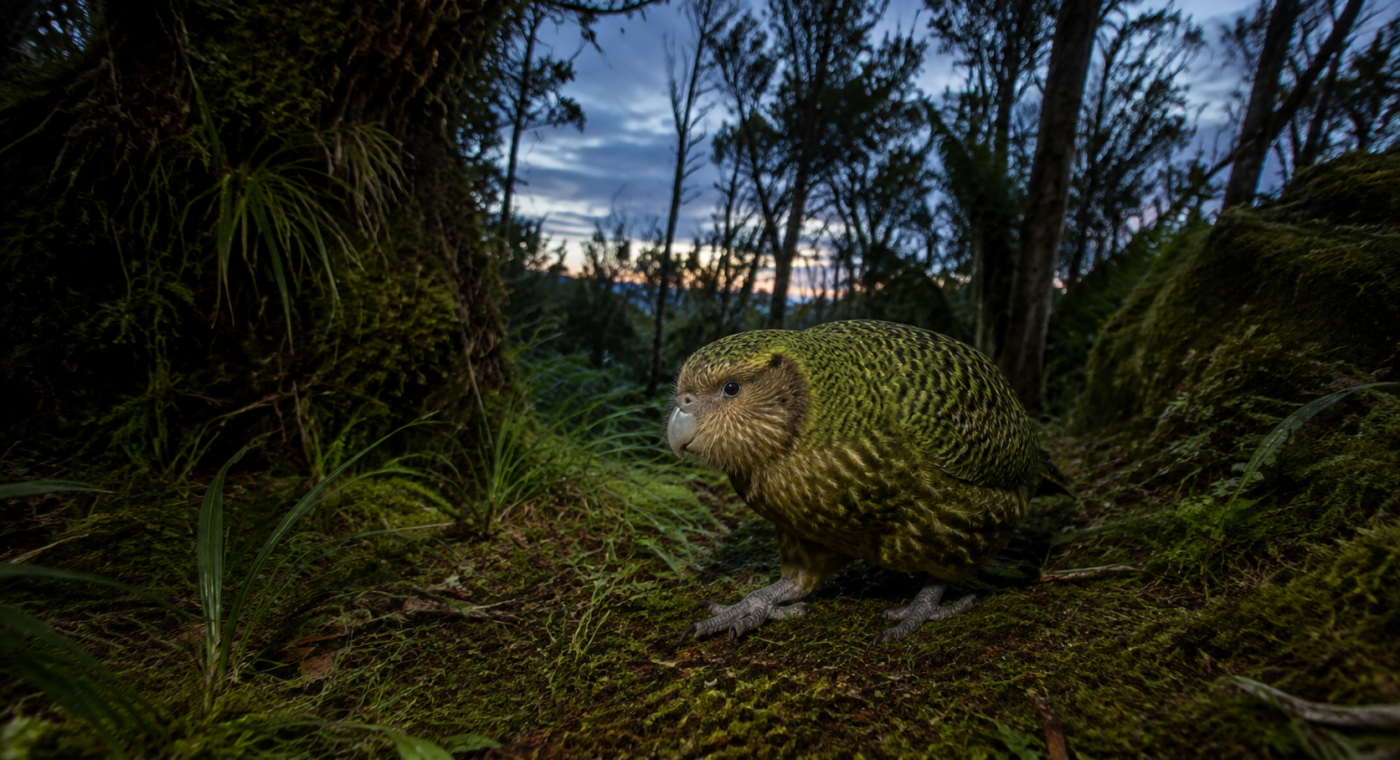
New Zealand’s official kākāpō population has reached 325 birds, a recovery-era high built from three decades of intensive management.
Ninety chicks from the 2026 breeding season entered the official count after the youngest surviving chick reached 150 days. The population began the modern recovery program in 1995 with only 51 birds, including 20 females.
The milestone is about more than a single productive season. Each bird is monitored with a radio transmitter, and breeding populations remain concentrated on Whenua Hou, Pukenui and Te Kāhaku. Low genetic diversity, infertility and poor hatching success still make the flightless parrots unusually dependent on skilled intervention.
This season also tested whether some management can become less intensive, using remote nest data to reduce egg and chick checks and scaling back supplementary feeding where appropriate. The next measure of success will be whether more natural breeding outcomes can be sustained while the species expands into additional secure habitat.