

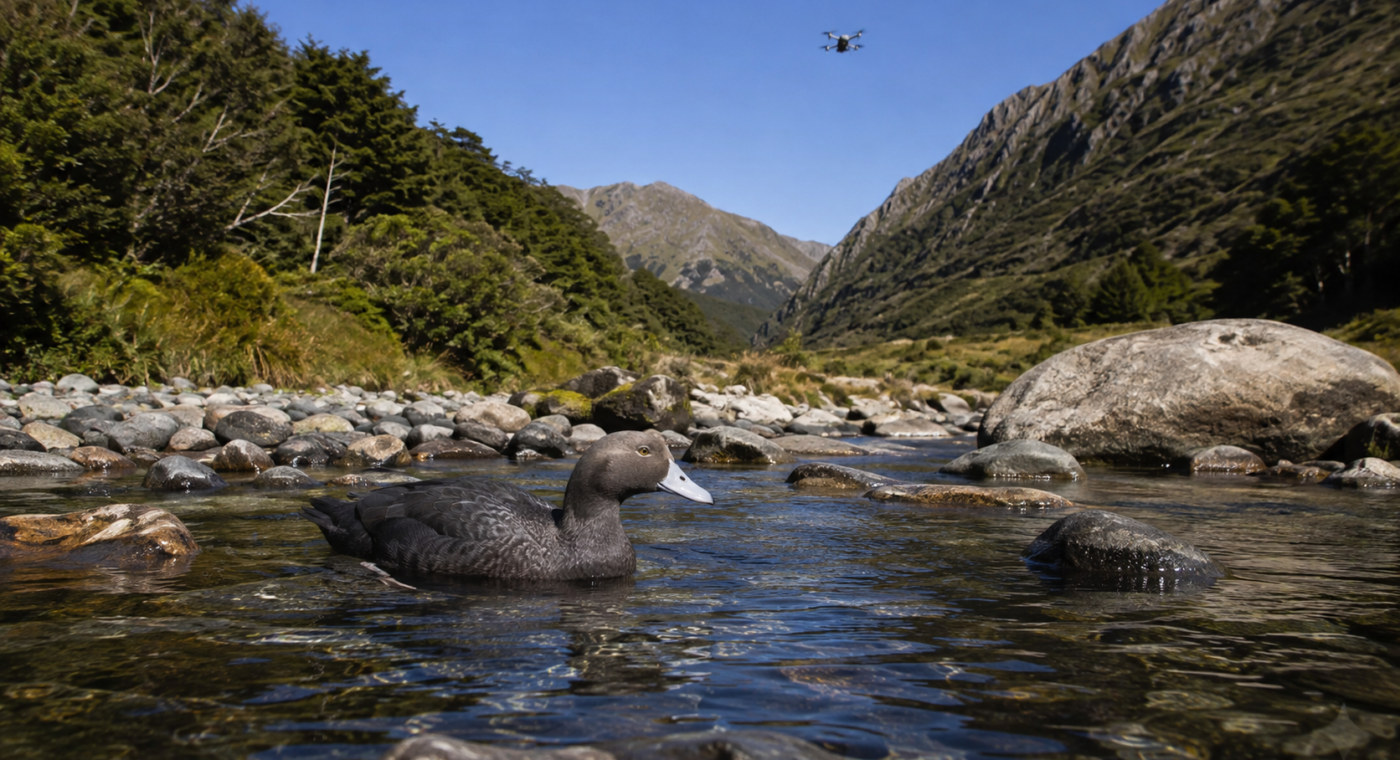
Whio live where observation is hardest: cold, fast rivers broken by boulders, white water and dense bankside vegetation. A New Zealand trial is testing whether thermal drones can help conservation teams find the threatened ducks more reliably in the Tongariro region.
Traditional surveys demand skilled observers and long hours along difficult waterways. Thermal cameras offer a different signal, detecting body heat that may stand out when plumage and movement disappear against rock and rapids. That does not make the work automatic. Weather, water temperature, canopy cover and flight rules can all influence what a sensor sees.
The promise is better information rather than technology for its own sake. More consistent detections could help teams map territories, target predator control and understand whether breeding pairs are holding ground.
The next questions should be methodological: how often does the system miss birds, how does it compare with experienced observers, and can it operate without disturbing wildlife? Those answers will determine whether an intriguing trial becomes a dependable conservation tool.