

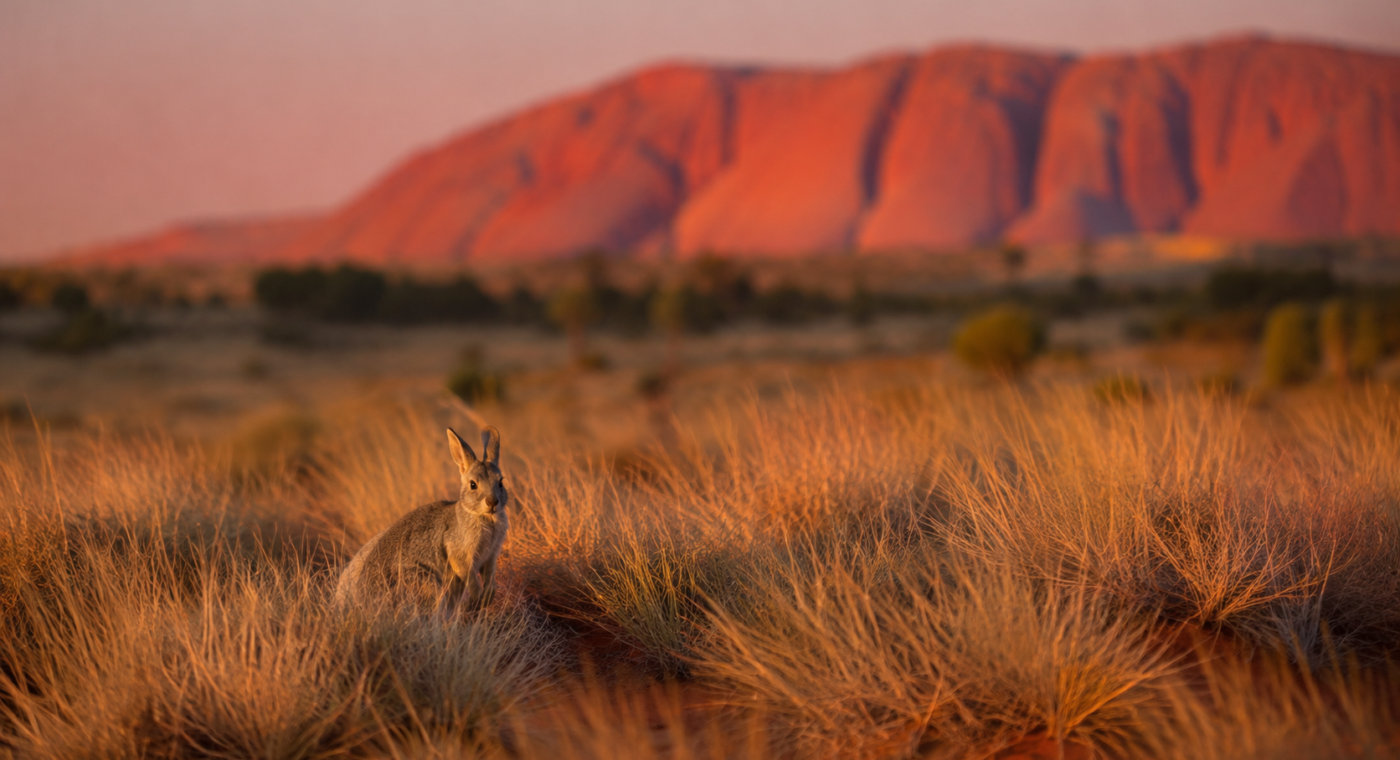
A 2026 count has estimated nearly 500 endangered mala, or rufous hare-wallabies, living at Uluṟu-Kata Tjuṯa National Park—an encouraging milestone for one of Australia’s most recognizable desert recovery programs.
Mala disappeared from the wild on mainland Australia after pressure from introduced predators and other landscape changes. Their return at Uluṟu has depended on a protected enclosure, predator management, monitoring and the knowledge and leadership of Aṉangu Traditional Owners working with park staff.
The latest estimate suggests the population is thriving within the managed area, but the number should not be read as a declaration that the species is secure everywhere. Fenced populations require sustained maintenance, and recovery beyond enclosures depends on controlling threats across much larger landscapes.
The result is significant because it demonstrates what long-term continuity can achieve. Wildlife recovery rarely follows the short timetable of annual budgets or news cycles. Breeding success, genetic health, habitat condition and predator pressure all have to be measured together.
For visitors, mala are also a reminder that Uluṟu-Kata Tjuṯa is a living cultural and ecological landscape, not only a scenic landmark. The recovery program’s strength lies in joining conservation science with knowledge rooted in Country.
Source: Parks Australia